Bucharest

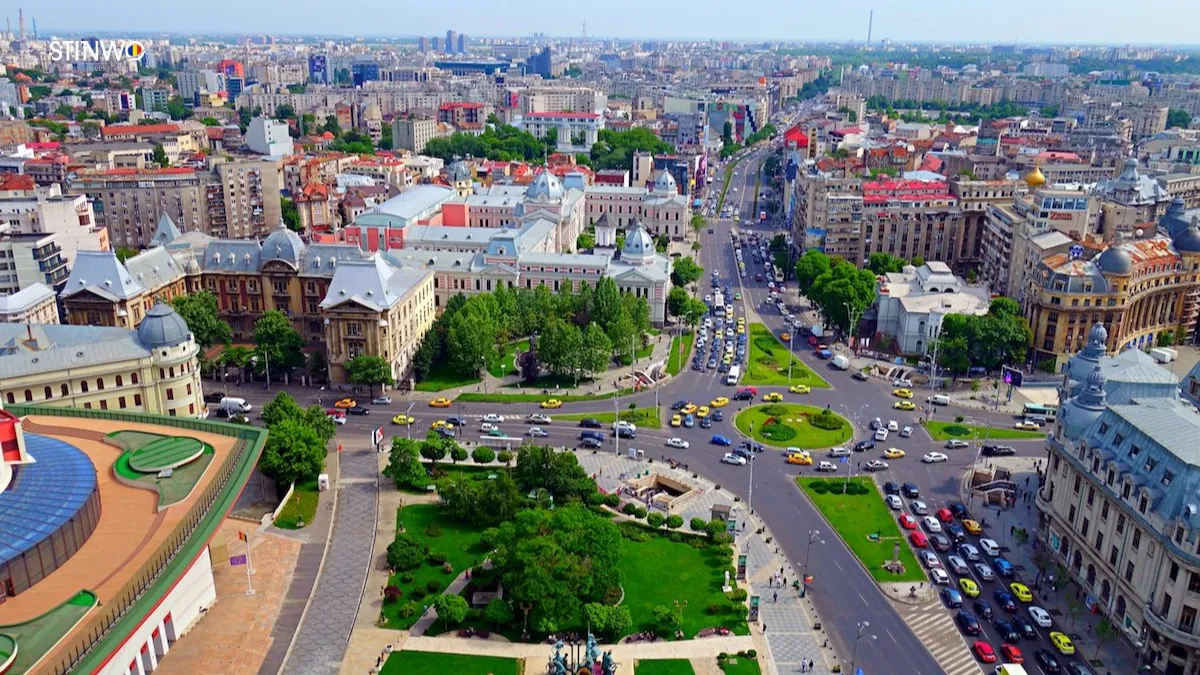
Romania’s capital is the country’s largest academic hub and a gateway to the Balkans and EU. With historic universities, broad English-taught offerings, and a lively tech-and-creative economy, Bucharest attracts international students looking for strong programs, internships, and a dynamic city life. Flagship institutions include the University of Bucharest (UB), Politehnica University of Bucharest (UPB), the Bucharest University of Economic Studies (ASE), and the “Carol Davila” University of Medicine and Pharmacy (UMFCD). The city center blends Belle Époque architecture with post-war and contemporary districts, while student neighborhoods stretch along the Dâmbovița River and into green areas like Tineretului. As the national capital, Bucharest concentrates cultural venues (museums, theaters, festivals), national archives and libraries, and the headquarters of major employers—ideal for part-time work and internships. Population data from Romania’s official statistics and city portals place the capital as Romania’s largest urban area, underscoring its role as the country’s academic and economic heart....
Is this city suitable for me?
Our experts are ready to guide you.
Population

1.7–1.8 million

Area

#228 km²

County

Bucharest

Region

South-East Part of Romania

Everything You Need to Know

Overview

Romania’s capital is the country’s largest academic hub and a gateway to the Balkans and EU. With historic universities, broad English-taught offerings, and a lively tech-and-creative economy, Bucharest attracts international students looking for strong programs, internships, and a dynamic city life. Flagship institutions include the University of Bucharest (UB), Politehnica University of Bucharest (UPB), the Bucharest University of Economic Studies (ASE), and the “Carol Davila” University of Medicine and Pharmacy (UMFCD).

The city center blends Belle Époque architecture with post-war and contemporary districts, while student neighborhoods stretch along the Dâmbovița River and into green areas like Tineretului. As the national capital, Bucharest concentrates cultural venues (museums, theaters, festivals), national archives and libraries, and the headquarters of major employers—ideal for part-time work and internships. Population data from Romania’s official statistics and city portals place the capital as Romania’s largest urban area, underscoring its role as the country’s academic and economic heart.

Bucharest sits in southeastern Romania (Wallachian Plain), at approximately 44°24′49″ N, 26°05′48″ E, on the Dâmbovița River. It is about 64 km north of the Danube, ~100 km south of the Carpathians, and ~250 km west of the Black Sea. The municipality is divided into six administrative sectors and functions as the seat of Ilfov County’s metropolitan area while being a distinct administrative unit itself. Elevation is low and terrain is generally flat, with lakes and parks peppering the urban fabric (notably Herăstrău/King Michael I Park and Tineretului).

Climate is temperate-continental with hot summers and cold winters (see Section 13). Bucharest’s official portals provide geographic coordinates and distances, and national open-data repositories list the city and sector codes used in administration (SIRUTA).

Basic Specifications

Specification
Details
Population
1.7–1.8 million
Area
228 km²
County
Bucharest
Region
South-East Part of Romania
Timezone
EET (UTC+2), EEST (UTC+3, Mar–Oct)
Climate
Temperate-continental
Average Temperature
Summer highs often > 28–30°C; winter averages around/below 0–2°C
Monuments
Memorial of Rebirth, Arcul de Triumf, Monument to the Heroes of the Air

Districts and neighborhood

Regie & Grozăvești (Sector 6) – “Politehnica Campus”

  • Characteristics: Biggest student cluster (UPB campus, dorms, affordable eateries); direct metro (M1/M3).
  • Best for: Engineering/tech students; tight budgets.
  • Average rent: Indicative only (no official municipal rent index for 2025).

Tineretului–Timpuri Noi (Sectors 3–4) – “South-Central”

  • Characteristics: Parks (Tineretului), quick metro to city center/ASE/UB buildings.
  • Best for: Balanced budget/green spaces; mixed faculties.
  • Average rent: Indicative only; check university housing first.

Tei–Lacul Tei (Sector 2)

  • Characteristics: Close to several campuses and IT parks; tram/bus links.
  • Best for: Economics/IT students; quieter residential vibe.

Aviatorilor–Floreasca–Pipera (Sectors 1–2)

  • Characteristics: Modern offices, higher prices; near internships.
  • Best for: Internships in tech/finance; higher budgets.

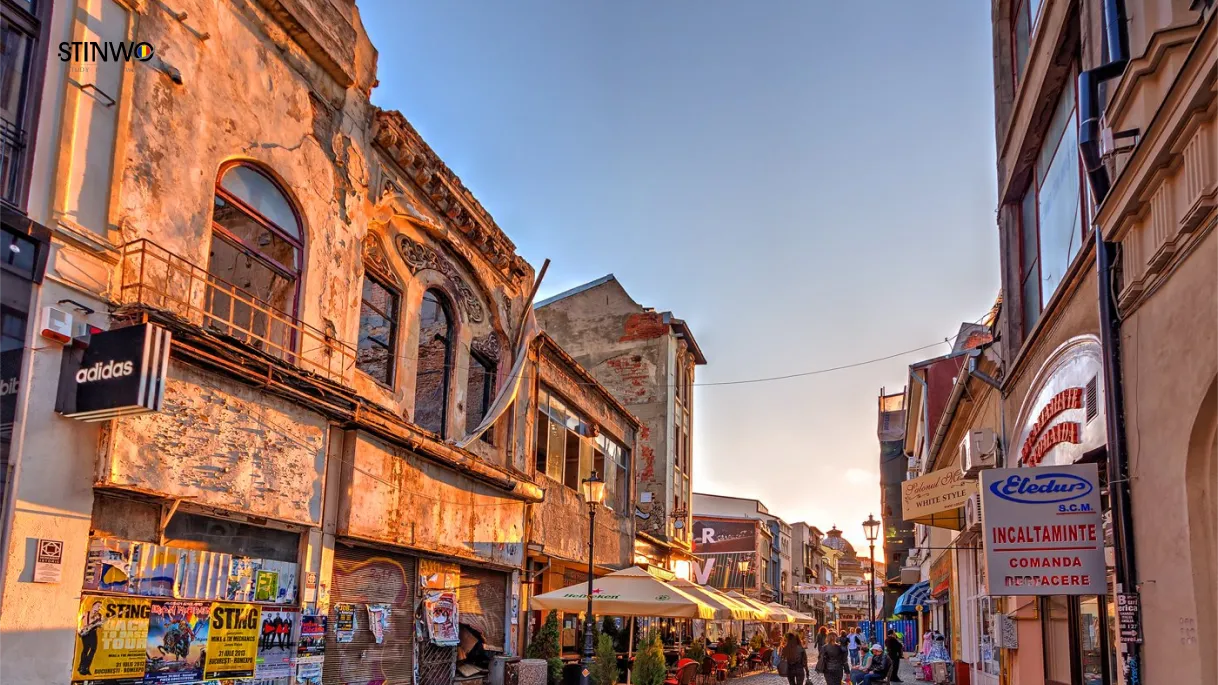
Historic Center & Universitate (Sectors 1–3)

  • Characteristics: Walkable to UB buildings, libraries, cultural venues.
  • Best for: Humanities/social sciences; nightlife proximity.

Academic landscape

Bucharest leads Romania by number of public universities and research institutes. Major public universities include University of Bucharest (UB), Politehnica University of Bucharest (UPB), Bucharest University of Economic Studies (ASE), Carol Davila University of Medicine & Pharmacy (UMFCD), plus specialized arts institutions. Ministry of Education reports (“Starea învățământului”) provide national higher-education statistics for the 2024–2025 cycle; universities publish their own yearbooks and rector reports.

Major universities

University of Bucharest (UB)

  • Type: Public
  • Languages: RO / EN
  • International Students %: Data published in UB stats/yearbooks
  • Notable Programs: Humanities, Social Sciences, Natural Sciences, Law (upb.ro)

UPB (Politehnica)

  • Type: Public
  • Languages: RO / EN
  • International Students %: Data in rector/annual reports
  • Notable Programs: Engineering, Computer Science, Robotics, Energy (unibuc.ro)

ASE (Bucharest University of Economic Studies)

  • Type: Public
  • Languages: RO / EN / FR / DE
  • International Students %: Annual senate/tuition docs
  • Notable Programs: Economics, Business, Data Science (senat.ase.ro)

UMF “Carol Davila”

  • Type: Public
  • Languages: RO / EN / FR
  • International Students %: Admissions stats
  • Notable Programs: Medicine, Dentistry, Pharmacy (umfcd)

Total academic community

Bucharest hosts Romania’s largest student population; consult the Ministry’s annual report and each university’s 2024–2025 pages for final figures.

Cost of Living

Subject
Cost
Accommodation
€150–€220 (university dorm, shared) / €350–€650 (private room/studio)
Food & Groceries
€160–€240
Transportation
€3–€10 after national student discounts (see Section 7)
Utilities
€60–€120
Entertainment
€60–€120
Healthcare
€10–€25
Total Monthly
€450–€1,150
Transportation
Status
Metro (Metrorex)
Yes
Bus/Tram/Trolley (STB)
Yes
Taxi/Ride_hailing
Yes
  • Airport: Henri Coandă International (OTP) – ~18 km north of center; direct bus & rail links.
  • Train: Gara de Nord – national links (Brașov, Cluj, Iași, Constanța) and international routes via CFR Călători.
  • Highways/Ring road: National corridors connect via DN/Autostrăzi; metropolitan ring under expansion (Gov. communiqués).

Safety and Security

Crime coefficients by sector (DGPMB, 2024):

  • Sector 1: 102.38
  • Sector 2: 103.45
  • Sector 3: 131.96
  • Sector 4: 89.27
  • Sector 5: 62.90 (lowest risk)
  • Sector 6: 104.66

National Police Annual Report (2024):

  • Romania remains comparatively safe overall, per IGPR summary.
  • Source: politiaromana.ro

Emergency Number:

  • 112 (national emergency number)
  • Guidance provided by STS and ANCOM. (sts.ro, ancom.ro)

Safe Areas for Students

  • University campuses (security staff; dorm access controls).
  • Central, well-lit areas (Universitate, Politehnicii, Tineretului) with active policing.
    For non-emergency local issues (noise, minor disturbances), Bucharest Local Police publishes contact numbers including 021.9752.

Emergency Contacts: Police/Fire/Ambulance 112; Bucharest Local Police: 021 539 14 00 / 021 9752.

Accomedation options

Options
Cost
University Dorms
€150–€220 – Shared rooms, utilities included, proximity to campus (UB/UPB/ASE).
Private Student Dorms
€300–€450 – Modern facilities; vary by operator (check licenses/permits).
Shared Apartments
€250–€400 (room) – 2–4 students; contracts required
Studios
€400–€650 – Independent living; verify heating type
Host Families
€400–€600 – Cultural immersion; limited supply

Accommodation Application

  • University dorms: Apply by late Aug–Sept per campus instructions (2024–2025 pages).
  • Private accommodation: Use registered agencies; insist on contracts.
  • Documents: Passport/ID, enrollment letter, proof of income/guarantor (as requested), and residence permit (post-arrival, for non-EU).

Must Visit landmarks

  • Muzeul Municipiului București – Palatul Suțu (city museum & exhibitions; student discounts often available).
  • ARCUB – Centrul Cultural al Municipiului București (festivals like Străzi Deschise on Calea Victoriei).
  • Municipal museum houses & galleries (12 museums/memorial houses within MMB).

Entertainment options

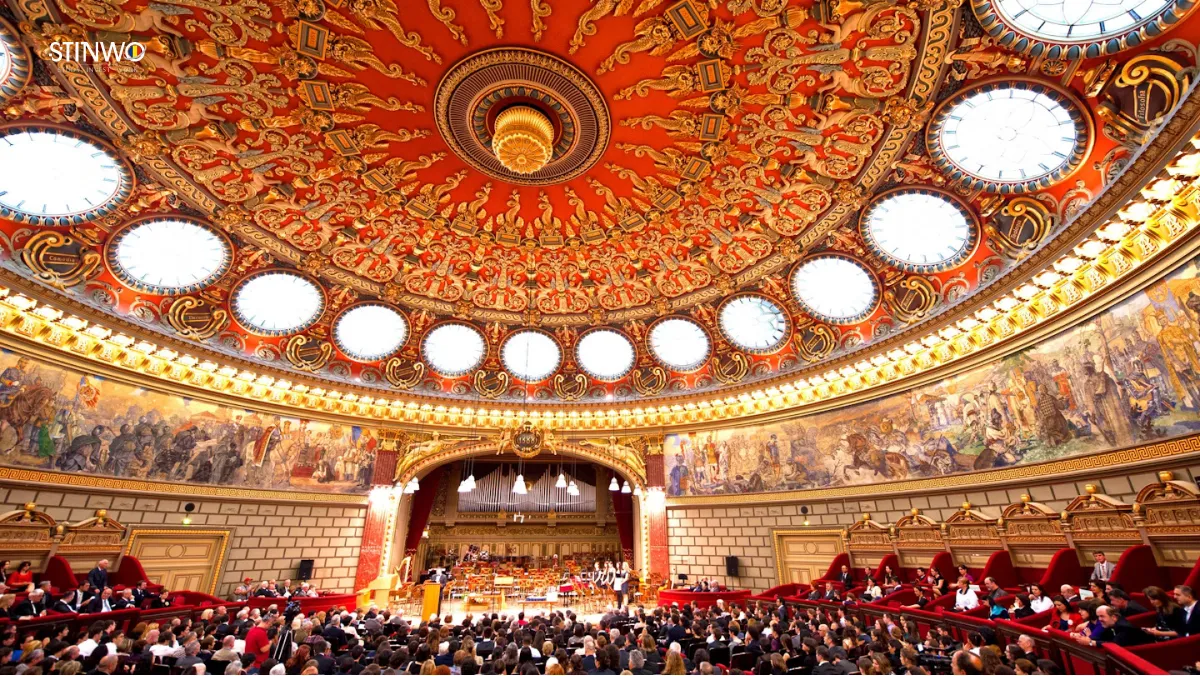
Multiplex cinemas, national theaters/opera, and live music venues sit across central sectors. ARCUB and MMB maintain calendars with student-friendly programming.

Student life

Student life in Bucharest is vibrant, diverse, and full of opportunities. As the capital of Romania, the city combines a rich cultural heritage with modern urban energy, offering students access to museums, theaters, music festivals, and a lively nightlife. Universities like the University of Bucharest attract international students, creating a multicultural environment where learning goes hand in hand with social experiences. Affordable public transport, student discounts, and countless cafés and coworking spaces make everyday life easier. Living in Bucharest means being part of a dynamic European capital where tradition and innovation meet, making it an ideal place to study and grow.

Climate overview

Spring (Mar–May):

  • Temperature: 10–22°C
  • Precipitation: Moderate
  • Student Activities: University fairs, riverfront walks

Summer (Jun–Aug):

  • Temperature: 24–32+°C
  • Precipitation: Low to moderate
  • Student Activities: Festivals, internships

Autumn (Sep–Nov):

  • Temperature: 10–20°C dropping to 5–10°C
  • Precipitation: Moderate
  • Student Activities: Academic year start, museum season

Winter (Dec–Feb):

  • Temperature: –2 to 5°C
  • Precipitation: Low to moderate; occasional snow
  • Student Activities: Indoor cultural events, day trips

Best time to visit

  • Apartment hunting: July–September
  • Applications: March–July (varies)
  • Budget travel: January–February
  • late June–August off-peak for some venues

Digital Facilities

Fixed Internet

  • Quality: Fast urban broadband (fiber widely available)
  • Student Options: Special student bundles (check providers)

Mobile Coverage

  • Quality: National 4G/5G network
  • Student Options: Prepaid SIM cards with low monthly costs

Wi-Fi Availability

  • Quality: High availability in campuses, libraries, and cafés
  • Student Options: University SSIDs for free student access

Co-working Spaces

  • Quality: Numerous options in central Bucharest
  • Student Options: Occasional student discounts or rates

City and national digital services support e-payments (ghiseul.ro), transport apps (STB/Metrorex updates), and 112 mobile app for emergencies via STS.

Food & Dining

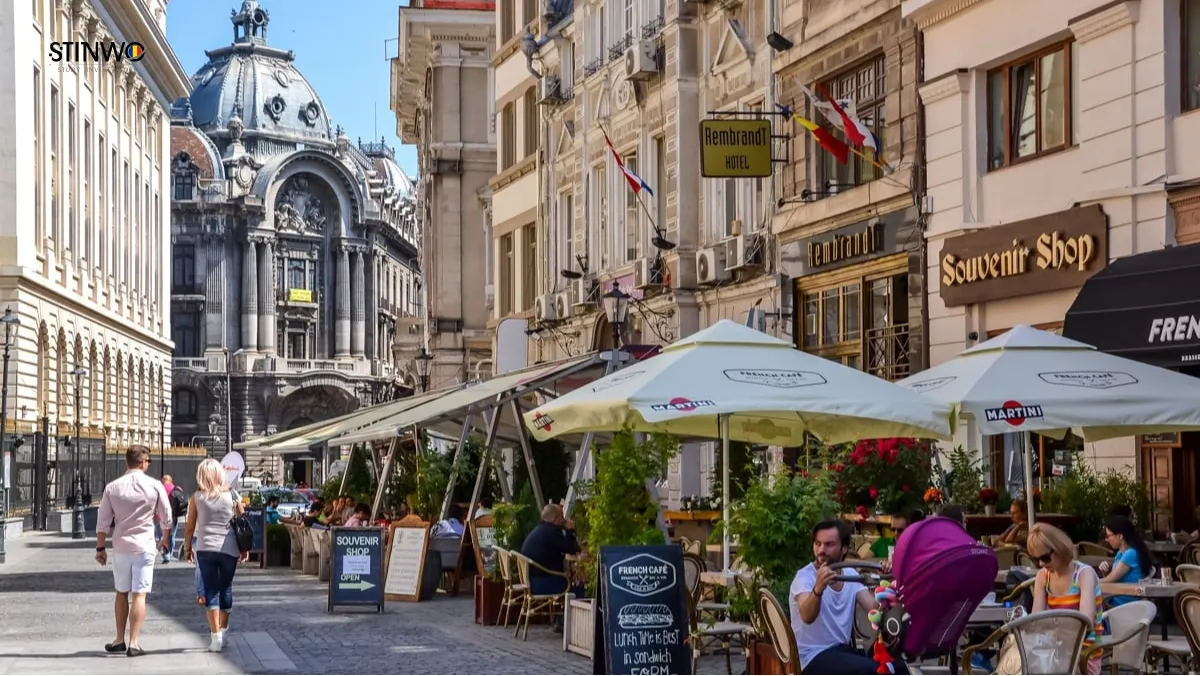
Bucharest blends Romanian classics (sarmale, ciorbă, mici) with international cuisines. Student-friendly canteens operate on or near campuses; central districts host cafés and affordable lunch menus.

University Cafeterias

  • Avg. Cost: €4–€6 per meal
  • Best Areas: All major campuses

Local Restaurants

  • Avg. Cost: €7–€12
  • Best Areas: Universitate, Romană, Tineretului

International Food

  • Avg. Cost: €8–€15
  • Best Areas: Old Town, Dorobanți, Floreasca

Fast Food

  • Avg. Cost: €4–€8
  • Best Areas: City-wide

Street Food

  • Avg. Cost: €3–€6
  • Best Areas: Old Town, festival areas (ARCUB events – arcub.ro)

Job Market

IT / Tech

  • Dominance: High
  • Entry-Level Salary: Based on offers; benchmark via minimum wage = 4,050 RON gross (2025)
  • Student Opportunities: Internships, part-time roles

Finance / Business Services

  • Dominance: High
  • Entry-Level Salary: Above minimum
  • Student Opportunities: Internships at headquarters and financial firms

Healthcare

  • Dominance: Medium
  • Entry-Level Salary: Varies by role
  • Student Opportunities: Assistant positions in teaching hospitals

Tourism / Events

  • Dominance: Medium
  • Entry-Level Salary: Near minimum wage
  • Student Opportunities: Event support roles (ARCUB, cultural venues – Government of Romania, arcub.ro)

Student Work Rights:

  • EU/EEA: Full mobility; no additional permits.
  • Non-EU: Work permitted with study residence; check conditions with Immigration and university International Offices.

Minimum Wage (2025): 4,050 RON/month gross (Government communiqués).

Sports & Recreation

Gyms

  • Number: Numerous (university & private)
  • Student Access: Available through campus or private facilities
  • Cost: €20–€40 per month

Swimming Pools

  • Number: Multiple (university and national pools)
  • Student Access: Varies by facility
  • Cost: €5–€10 per entry

Sports Centers

  • Number: City-wide; includes national complexes (e.g., Lia Manoliu area)
  • Student Access: Programs vary
  • Cost: €20–€40 per month

Outdoor Facilities

  • Number: Parks, riverfront walking & jogging paths
  • Student Access: Free
  • Cost: —

The National Sports Agency lists national clubs/complexes; universities run intramural leagues.

Day-in-the-Life Student Experience

Morning
Morning

Grab a pastry/coffee; metro to lectures (M1/M3/M5 serve major campuses). Travel with a discounted pass (see Section 7).

Morning
Afternoon
Afternoon

Lunch near campus; study at faculty libraries; museum stop (Palatul Suțu) on lighter days.

Afternoon
Evening
Evening

Affordable dinners around Universitate/Tineretului; film or theater; late tram/bus connections home.

Evening
Weekend
Weekend

Străzi Deschise walks, municipal museum circuit, or train day-trip via CFR Călători.

Weekend

Gallery

Free Consultant