


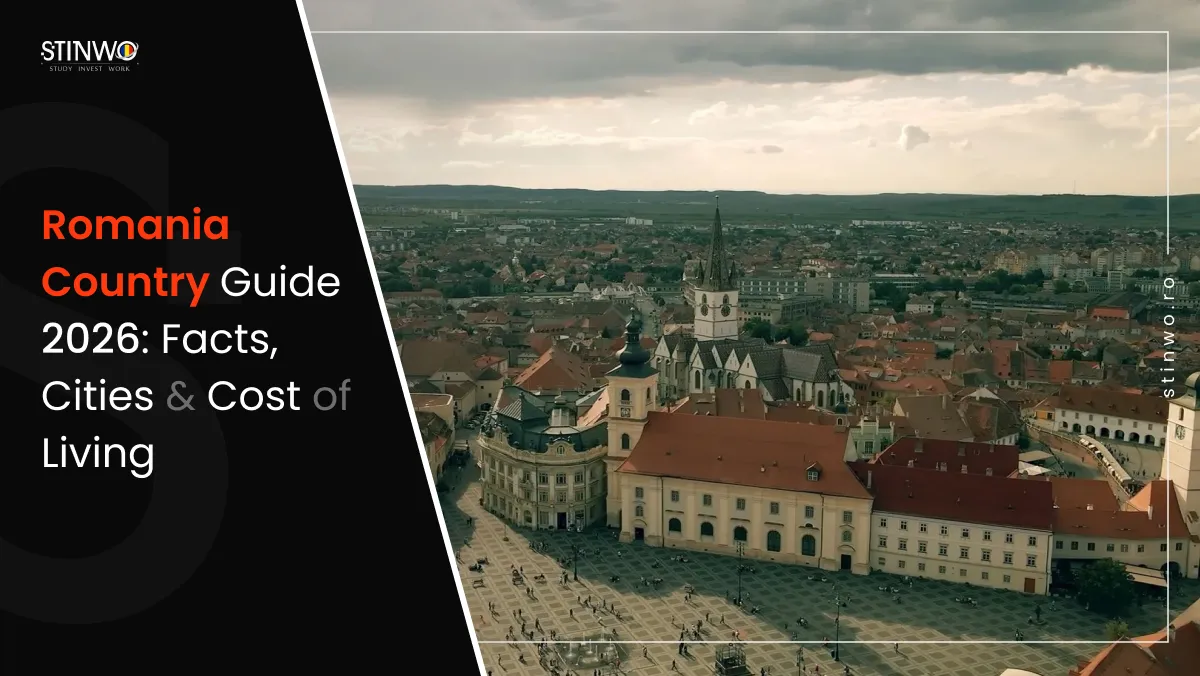
Romania is one of the most fascinating destinations in Southeastern Europe, known for its stunning natural landscapes, rich history, and diverse culture. This country is located in the Balkan region and is also a member of the European Union. In terms of size, Romania country ranks among the larger EU states, placing around 14th by area. Recent Romania population estimates put the country at roughly 19 million people.
The official language is Romanian, a Romance language with strong Latin roots. Thanks to its ethnic diversity—including Hungarians, Roma communities, and Germans—Romania has developed a multicultural society. If you’re planning travel or considering relocation, understanding key Romania facts like demographics and social structure can help you adapt more easily to life in Romania. The national currency is the Romanian leu (RON).
History of Romania
The history of Romania is filled with major events and powerful transformations that shaped the modern Romania country we know today. The roots of Romania go back to the ancient Dacians, who were conquered by the Roman Empire in the 1st century CE—an important milestone that influenced the Romanian language and identity.
During the Middle Ages, the region that is now Romania was divided into three main principalities: Wallachia, Moldavia, and Transylvania. In 1859, Wallachia and Moldavia united, laying the foundation for modern Romania. In the 20th century, Romania took part in both World Wars, and after World War II the country came under communist rule.
The 1989 Revolution brought the communist regime to an end and opened the way for democratic reforms. Later, in 2007, Romania officially joined the European Union—one of the most significant modern Romania facts and a key reason it is often discussed in the context of Romania in Europe / Southeastern Europe.
Romania Map and Neighboring Countries
A Romania map highlights the country’s strategic location in Europe, connecting Central and Southeastern Europe. Romania borders the Black Sea to the east, Ukraine to the north, Moldova to the east, Bulgaria to the south, and Serbia and Hungary to the west. This geographic position has helped shape Romania’s culture, trade routes, and regional influence over time.
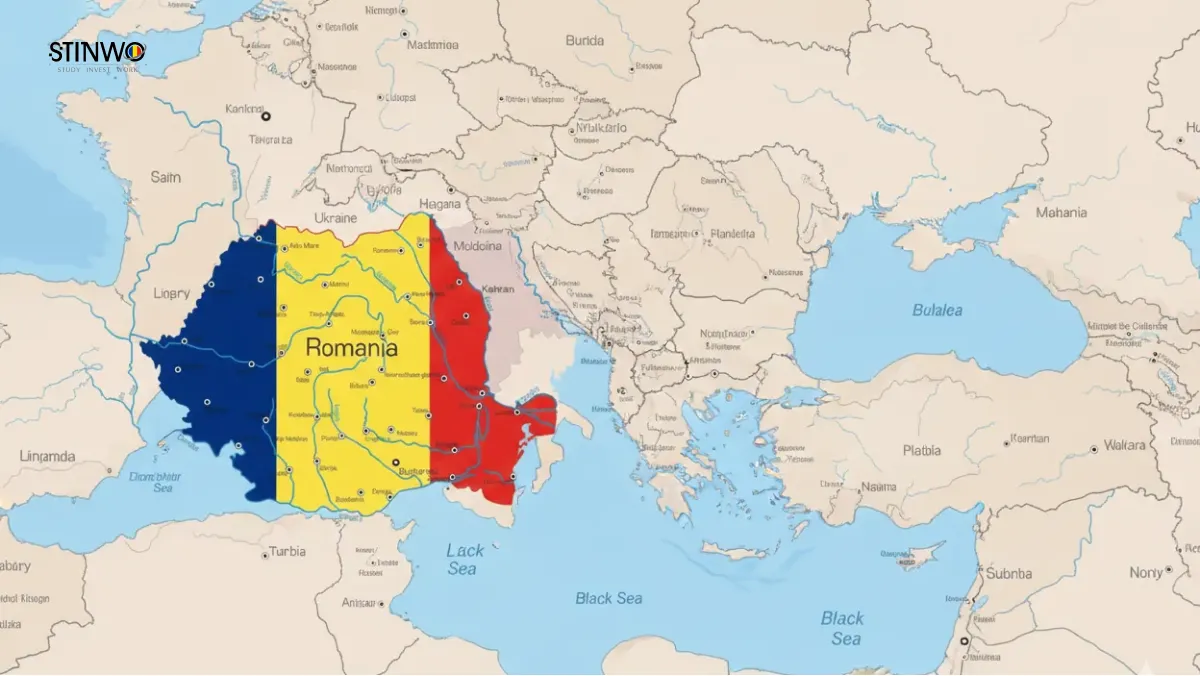
Covering an area of around 238,000 square kilometers, Romania includes a variety of landscapes—from the Carpathian Mountains to fertile plains and scenic coastal areas along the Black Sea. The Romania capital, Bucharest, is located in the southern part of the country and serves as the political, economic, and cultural center of the Romania country.
Romania’s neighbors have played an important role in its history and development. Today, shared borders support cross-border business, tourism, and transportation, making Romania an active part of Romania in Europe / Southeastern Europe and the wider European region.
Romania Economy: What Is It Like Today?
If you’re considering relocating for work, it’s helpful to know that Romania has a fairly diverse and growing economy. Since joining the European Union, the Romania country has experienced stronger economic development and greater integration with European markets—one reason Romania is often discussed when people research opportunities in Southeastern Europe. Some of Romania’s most profitable and in-demand industries include:
- Automotive manufacturing
- Energy (supported by significant natural resources such as oil and natural gas)
- Agriculture
- Information Technology and Communications (IT & ICT)
This economic variety—combined with steady labor market demand—has made Romania an appealing option for skilled professionals. Many people choose Romania for job stability, competitive income potential, career growth, and the long-term advantages of building a future within the European Union.
Property Ownership and Renting in Romania
Buying or renting property in Romania is generally straightforward for foreigners—especially since the Romania country became part of the European Union. EU/EEA citizens can typically purchase real estate in Romania under the same conditions as Romanian citizens, including land in many cases. In contrast, non-EU buyers can usually purchase apartments and buildings, but land ownership is more restricted and may require buying through a Romanian-registered legal entity (such as an SRL) depending on the property type.
Property prices in Bucharest 2025
Real estate prices in Bucharest can vary widely by neighborhood, building age, and finishing level. In 2025, mid-range market averages are often reported around €2,000–€2,300 per m², while premium central areas can be higher (sometimes exceeding €2,500 per m²). In smaller Romanian cities, prices are usually more affordable than in the capital.
Renting in Bucharest
Rental costs also depend on location and season. For example, one market report put the average rent for a one-bedroom apartment in Bucharest at about €494 (September 2025), while other datasets based on portal medians can show higher typical asking levels. In practice, many one-bedroom apartments in central areas are often listed around €400–€600+ per month, depending on the neighborhood and the apartment’s condition.
Legal process and registration
Property ownership in Romania is usually finalized through an official sale contract signed before a Romanian notary, and ownership becomes legally secure once it is registered in the Land Book (Cartea Funciară), managed through Romania’s cadastral/land registration system (ANCPI).
Because Romania’s economy has grown and the housing market has remained active, real estate can be an attractive option for long-term residents and newcomers—especially in major cities like Bucharest.
Cost of Living in Romania
The cost of living in Romania is generally lower than in many Western European countries, which makes the Romania country a popular choice for people looking for an affordable lifestyle in Southeastern Europe. As a practical Romania facts guideline, a single person’s average monthly expenses (excluding rent) are often estimated at around €500–€700, depending on the city and lifestyle.
Everyday prices in Romania
Daily essentials are usually budget-friendly. For example:
- Basic groceries can be relatively inexpensive (e.g., bread and milk prices often stay low compared to Western Europe).
- Local restaurants commonly offer good-quality meals for roughly €10–€15, especially outside the most touristy areas.
Housing is often the biggest cost difference between cities. Expenses tend to be higher in the Romania capital, Bucharest, while smaller cities can be noticeably cheaper. Public transport and utilities are also typically reasonably priced, helping many residents maintain a comfortable standard of living on a moderate budget.
Public Transportation in Romania
Public transportation in Romania is generally reliable and affordable, especially in major cities. In the Romania capital, Bucharest, residents and visitors can use a wide network of metro lines plus surface transport such as buses, trams, and trolleybuses. For example, STB (Bucharest surface transport) offers a 90-minute ticket for 3 RON, and an integrated STB + metro ticket (120 minutes) for 7 RON. Metrorex (the Bucharest metro operator) lists a single metro trip at 5 RON.
For moving between cities across the Romania country, intercity rail is a popular option. Romania’s national passenger rail operator, CFR Călători, provides connections on many major routes, and official timetables are widely available online.
For longer distances, Romania is also well connected by air. Henri Coandă International Airport (Bucharest) is the country’s largest airport and serves both domestic and international routes.
In larger cities, cycling is becoming more common as infrastructure improves (Bucharest has a long-term plan to expand bike lanes). Ride-hailing apps are also active—Uber operates in Bucharest and several other Romanian cities, which can make getting around even easier.
Culture and Traditions in Romania
The culture of Romania reflects a unique blend of Latin roots with Slavic and Balkan influences. Romanian society is known for strong hospitality, and family often plays a central role in daily life, celebrations, and community traditions.
Romanian holidays and folk traditions
Traditional events remain an important part of Romanian identity. One well-known celebration is Mărțișor on March 1, a spring tradition marked by small red-and-white symbols that people exchange for good luck. Folk dancing, local festivals, and regional costumes are also widely loved, especially outside the Romania capital, Bucharest, where many customs are preserved more strongly.
Romanian food and local lifestyle
Romanian cuisine is a key part of the country’s cultural character. Popular dishes include:
- Sarmale (cabbage rolls, usually filled with meat and rice)
- Mici / Mititei (grilled minced-meat rolls, often served with mustard)
Music and community festivals—especially folk music—continue to shape social life across Romania, from mountain villages in the Carpathians to lively urban neighborhoods. Getting familiar with these traditions can make it easier to connect with local people, understand social etiquette, and feel more at home while traveling or living in Romania.
Romania Climate and Weather
Romania has a true four-season climate and is generally classified as temperate-continental. In the Romania country, summers are usually warm, winters can be cold, and spring and autumn are often mild and comfortable—making Romania in Europe / Southeastern Europe a great destination to visit in different seasons of the year.
Summer in Romania
In summer, especially in the southern regions, temperatures commonly reach around 25–30°C. In mountainous areas—such as the Carpathians—the air is usually cooler and more comfortable, and sudden rainstorms with thunder and lightning can occur.
Winter in Romania
Winter can be cold, with heavy snowfall in mountain regions, and temperatures can sometimes drop below 0°C, particularly in higher elevations and inland areas.
Best time to visit Romania
Many visitors consider spring and autumn the most enjoyable seasons in Romania, thanks to mild temperatures and comfortable weather—making these months ideal for sightseeing, outdoor activities, and cultural travel across Romania.
Opening a Bank Account in Romania
Opening a bank account in Romania is usually simple for foreigners. Major banks like BCR, BRD, and Banca Transilvania offer personal and business services. Common requirements include a passport, residence permit, and sometimes proof of address.
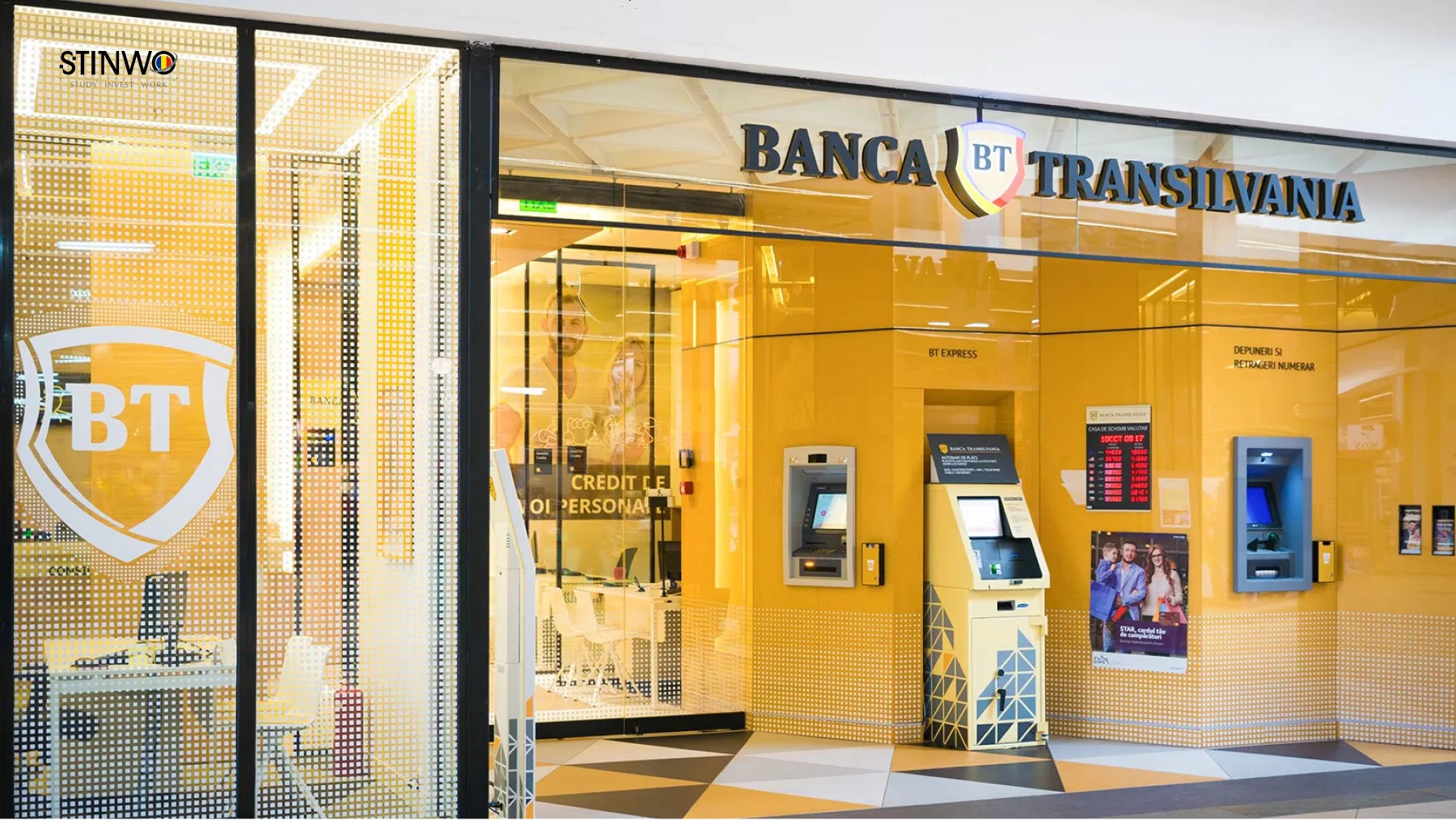
For clients who want to open a business bank account in Romania, Stinwo provides expert guidance, helps prepare documents, and ensures legal requirements are met—so you can manage your finances securely in the Romania country.
Romania Capital and the 9 Biggest Cities
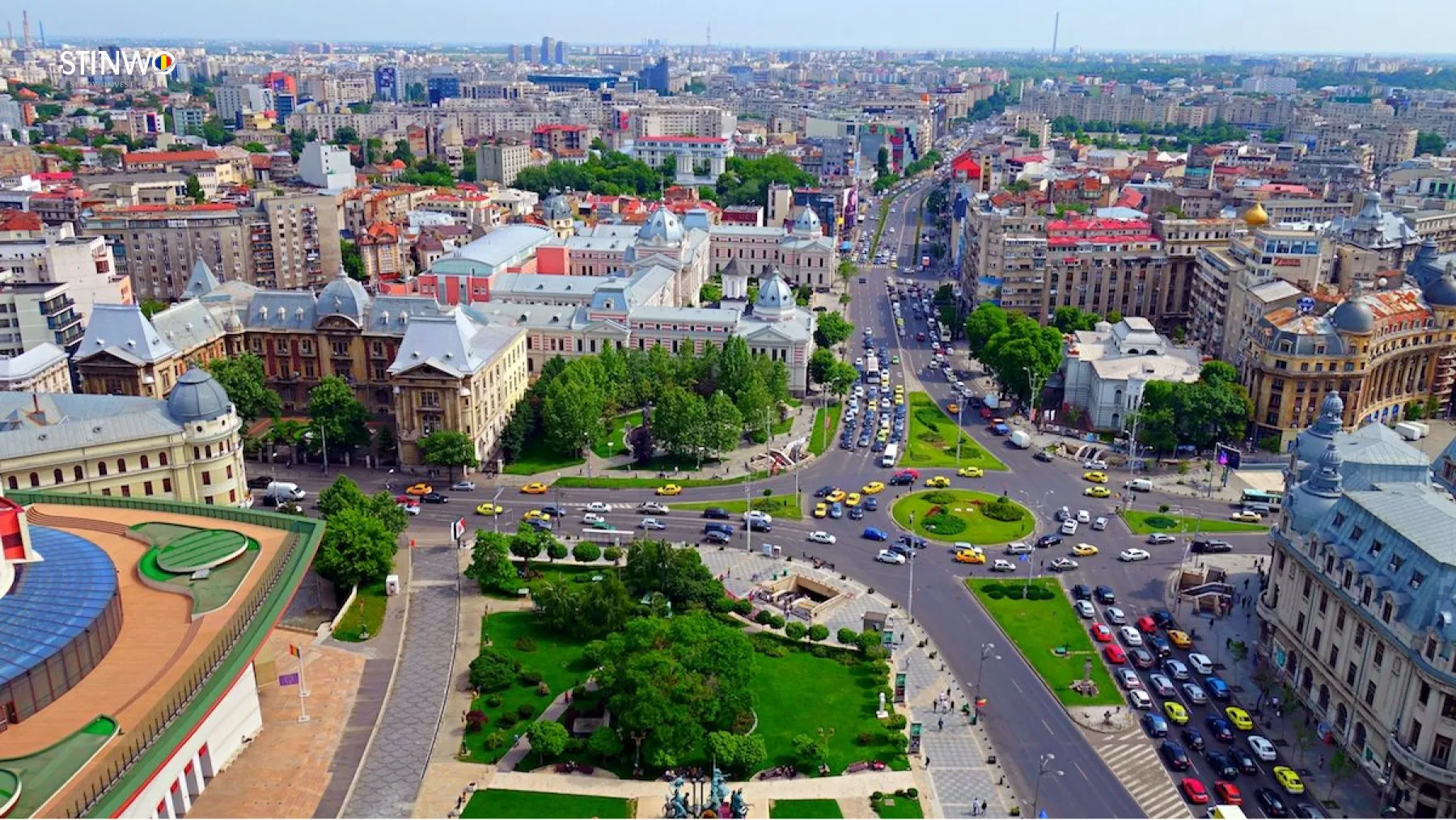
Bucharest, the Romania capital, is the nation’s main hub for government, business, and culture. It’s the largest city in Romania, known for its lively neighborhoods, major universities, and fast-growing economy—making it a top choice for work, study, and long-term living in the Romania country. Here are nine of the largest and most influential cities in Romania:
- Cluj-Napoca – a major cultural and university hub
- Timișoara – famous for its revolutionary history and elegant architecture
- Iași – the historic capital of Moldavia and a leading academic city
- Constanța – Romania’s main Black Sea port city
- Craiova – an important industrial center in the south
- Brașov – a mountain city known for tourism and nearby attractions
- Galați – a key Danube river port and industrial city
- Ploiești – a major energy and oil-industry center
- Oradea – near the Hungarian border, known for its beautiful Baroque-style architecture
Together, these cities highlight Romania’s economic strength and cultural diversity across Southeastern Europe.
Tourism in Romania
Romania is one of the most surprising travel destinations in Eastern and Southeastern Europe, combining untouched nature, legendary castles, living traditions, and energetic historic cities. This mix of experiences is exactly why the Romania country attracts travelers who want more than the usual European itinerary. With a quick look at a Romania map, you’ll see how easy it is to plan routes that include mountains, medieval towns, and Black Sea beaches.
Top places to visit in Romania
- Bucharest (Romania capital) – Explore the Palace of the Parliament, the Old Town, Herăstrău Park, and the Village Museum for a mix of modern city life and tradition.
- Brașov (Brasov) – A beautiful mountain city known for the Black Church, Mount Tâmpa, and nearby Bran Castle (often linked to the Dracula legend).
- Sighișoara (Sighisoara) – A well-preserved medieval town with the Clock Tower, colorful historic streets, and a famous medieval festival atmosphere.
- Transylvania – Home to fairytale-style castles and strong local heritage, including Peleș Castle, Corvin Castle, and traditional Saxon villages.
- The Carpathian Mountains – Ideal for hiking, nature trips, and winter activities like skiing, with national parks and scenic highland areas.
- Black Sea Coast – Visit Constanța and seaside resorts like Mamaia for beach отдых and summer nightlife.
- Bucovina – Known for painted monasteries such as Voroneț and Sucevița, rich in history and art.
- Danube Delta – One of Europe’s most unique wetlands for boat trips, birdwatching, and peaceful stays in riverside guesthouses with fresh seafood.
In Romania, you can ski in the mountains, walk through medieval legends in Transylvania, discover rare wildlife in the Danube Delta, and enjoy a modern European city vibe in Bucharest—all in one trip. If you want a relaxing seaside vacation or a culture-rich journey, Romania is a strong choice for an unforgettable European getaway.
Pros and Cons of Living in Romania
Living in Romania comes with a balanced mix of advantages and challenges. On the plus side, the Romania country is known for a relatively low cost of living, beautiful natural landscapes (especially the Carpathian Mountains and the Danube Delta), EU membership, and welcoming local communities. On the downside, some newcomers notice complex administrative bureaucracy, higher pollution levels in larger cities, and weaker infrastructure in certain rural areas.
Overall, Romania can be a strong option for people looking for a calm, affordable lifestyle in Southeastern Europe—especially if you choose the right city and prepare for local processes.
Is Romania a Good Country for Immigration?
For many people, Romania is an attractive migration destination because of its strategic place in the European Union, relatively affordable living costs, steady economic development, and four-season climate. Depending on your background and goals, common immigration pathways may include:
- Work migration (job offer from an employer, EU Blue Card where applicable)
- Study migration (admission to a recognized educational institution)
- Investment migration (company registration, real estate investment, or other legal investment routes)
- Family reunification (if close family members are Romanian citizens or permanent residents)
If you’d like personalized guidance, Stinwo offers expert consultations to help you choose the best route and prepare the required steps. To speak with our specialists, complete the free consultation form on this page.
How to obtain Romania Visa 2026
Getting a Romania visa (and later a residence permit) depends on your nationality and the purpose of travel—tourism, business, work, study, family reunification, or investment. Romania has been an EU member since 2007, and it now applies Schengen rules for short stays: Romania began issuing uniform Schengen visas from March 31, 2024, and became a full Schengen member with internal land-border checks lifted from January 1, 2025.
Because requirements can vary and rules evolve, it’s best to follow the correct legal pathway for your Romania Visa 2026 application. Stinwo Romania provides expert, step-by-step guidance to help you choose the right visa type, prepare documents, and stay compliant with current regulations. Romania visa types (short-stay vs long-stay) is discussed in the table below:
|
Visa Category |
Visa Type | Permitted Stay | Notes |
| Short-stay (Schengen C) | Tourist / Travel Visa | Up to 90 days in any 180-day period |
Suitable for tourism and short visits. Romania issues Schengen short-stay visas under the 90/180 rule. |
|
Short-stay (Schengen C) |
Visit / Family Visit Visa | Up to 90 days in any 180-day period | Similar to a tourist visa, but intended for visiting relatives/friends. |
| Short-stay (Schengen C) | Business Visa | Up to 90 days in any 180-day period |
For meetings, conferences, negotiations, and other short business activities. |
|
Short-stay (Transit) |
Transit / Airport Transit Visa | Depends on transit needs | For passing through Romania en route to a third country (airport/international transit scenarios are covered under Schengen visa rules). |
| Long-stay (National D) | Work Visa | Visa D: usually 90 days (single/multiple entry) → then residence permit |
Romania’s long-stay visa is typically granted for 90 days, after which you apply for a residence permit. |
|
Long-stay (National D) |
Study Visa | Visa D: usually 90 days (single/multiple entry) → then residence permit | For enrollment in university/education programs; after entry, you continue the stay via a residence permit. |
| Long-stay (National D) | Family Reunification | Visa D: usually 90 days (single/multiple entry) → residence linked to sponsor |
Joining a spouse/parent/child with legal status; residence extensions generally depend on the sponsor’s status. |
|
Long-stay (National D) |
Investment / Entrepreneurship | Visa D: usually 90 days (single/multiple entry) → residence permit (often 1–3 years, renewable) |
For setting up/investing and managing a business; after entry, you obtain a residence permit. |
If you want more complete and accurate information about Romania, applying for a Romania tourist visa, or planning immigration to the Romania country, it’s best to use the free expert consultations offered by Stinwo. To speak with our specialists, simply complete the free consultation form on this page.