688 Euro
3_years
romanian
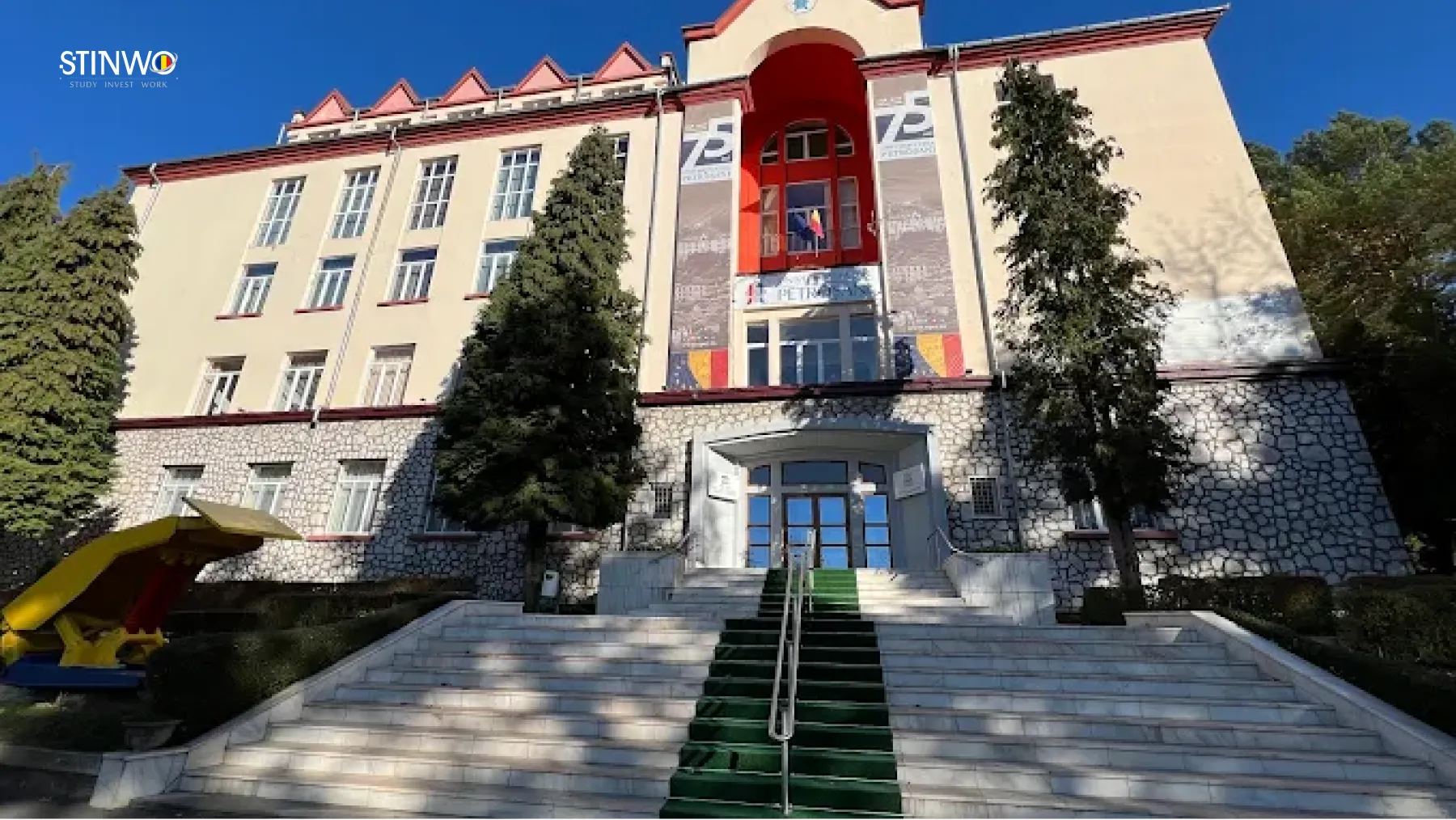
Nursing at the University of Petroșani is offered as a postsecondary tertiary non-university program, Asistent Medical Generalist, within the Colegiul pentru Învățământul Terțiar Nonuniversitar (CITN-UPET). It trains general nurses at national qualification level 5 in the field Sănătate și asistență pedagogică, under the academic umbrella of a public, state university founded in 1948.
The programme is newly authorised by the Romanian Agency for Quality Assurance in Pre-University Education (ARACIP), signalling compliance with national standards for nurse education. It combines a university environment and access to campus facilities with a practice-oriented, small-cohort nursing qualification.
Professionally, Nursing at the University of Petroșani responds to a sustained demand for qualified nurses in Romania and across Europe, where ageing populations, chronic disease and community care models require more generalist staff. Romanian reforms also foresee a gradual shift towards higher-level nurse education, so a solid vocational qualification can be a valuable first step before future bachelor-level studies.
Students choose Nursing at the University of Petroșani for its accessible entry (with or without the Baccalaureate), lack of admission and enrolment fees, and the opportunity to study in a compact, friendly campus with modern teaching rooms and simulation spaces dedicated to health training.

Specification | Details |
|---|---|
Available Degrees | Postsecondary tertiary non-university qualification “Asistent Medical Generalist” (General Nurse) |
Teaching Languages | Romanian |
Standard Program Duration | 3 academic years |
Total Semesters | 6 semesters |
Total Credits | Credits are not formally expressed in ECTS |
Entrance Examination | File Based |
Admission Registration Period –
Deadline | 14 July – 22 August 2025 |
The Nursing (Asistent Medical Generalist) programme at the University of Petroșani follows the Romanian national model for level-5 tertiary non-university training. The academic year is structured in weeks of theory and weeks of clinical practice, ensuring continuous integration between classroom learning and real-world patient care. At the end of the final year, students sit a professional competence exam for certification of the qualification.
The first year builds core biomedical and nursing foundations. Typical modules—based on the national AMG curriculum—include anatomy and physiology, basic pathology, microbiology, hygiene, fundamentals of nursing, ethics and deontology, patient communication and informatics. Students learn essential practical skills such as vital-sign measurement, aseptic techniques, injections and basic wound care in skills labs and simulation rooms, before gradually moving into closely supervised clinical rotations.
In the second stage, the emphasis shifts to applied medical-surgical nursing, pharmacology, internal medicine, surgery, orthopaedics, and maternal–child health (obstetrics-gynaecology and paediatrics) alongside mental health and psychology.
Students spend a larger proportion of time in hospitals and outpatient units, consolidating skills in medication administration, monitoring, pre- and post-operative care, and teamwork within multidisciplinary teams. Clinical placements are scheduled during both semesters, in line with the national 14-weeks theory + 7-weeks practice pattern.
The final year typically deepens competence in community and public health nursing, chronic disease management, geriatrics, palliative care, emergency and critical care, and nursing management/leadership.
Students undertake extended clinical practice blocks, often culminating in a concentrated internship where they progressively assume more responsibility under supervision. The programme concludes with the examen de certificare a calificării profesionale, validating theoretical knowledge, clinical skills and professional attitudes required of a general nurse.
Admission requirements are defined in the CITN-UPET methodology and the 2025 postsecondary Nursing flyer.
688 Euro
Nursing at the University of Petroșani has a clear cost structure for the 2025–2026 cohort, detailed in the official flyer and complemented by the university’s general fee regulations.
All amounts are in Romanian lei (RON) and may be updated; applicants should always check the latest fee documents on the official UPET/CITN websites before enrolling.
Graduates of Nursing at the University of Petroșani are prepared for entry-level roles in Romania’s healthcare system, subject to professional registration requirements set by OAMGMAMR and evolving national legislation. Potential pathways include:
Indicator | Number |
|---|---|
Faculty of Medicine Students | Around 4,000 students across bachelor, master and doctoral programmes at the University of Petroșani; Study in Romania lists 3,994 students and 233 international students from 11 nationalities |
Available Places Medicine (English) | 56 seats total – 28 state-funded and 28 fee-paying for Asistent Medical Generalist (2025–2026 intake) |
University Founded | 1948 |
University Status | Public, non-profit |
The Nursing (Asistent Medical Generalist) path at Petroșani offers a mix of accessibility and academic support not always available in stand-alone vocational schools.
Although the Nursing programme itself is a tertiary non-university (level-5) qualification, its placement within an ARACIS-accredited, Bologna-compatible university and its ARACIP authorisation ensure that it is legally recognized in Romania and aligned with European quality frameworks.
This underpins graduate mobility within Romania, facilitates recognition by the national nursing body (subject to evolving regulations), and provides a credible foundation for future progression to university-level nursing or health-science degrees, both domestically and abroad.