





A Schengen visa allows you to travel freely within the Schengen Area for up to 90 days within a 180-day period. This visa gives you access to 29 European countries, making it one of the most popular travel visas in the world. If you are planning a short stay in the Schengen Zone or need to transit through one of the member states, you can apply for a Schengen visa. If you meet the eligibility criteria, you can obtain this tourist visa through any of the Schengen visa countries.
The process of obtaining a Visa is specialized and requires experience and careful attention to detail. To receive accurate information about the required documents, embassy appointments, and the latest Schengen visa requirements, you can consult the experts at Stinwo Institute. In this guide, we will explain what a Schengen visa is, how it works, and how you can successfully apply for it—including key details such as the Schengen visa fee and important steps to increase your chances of approval.
Schengen visa types
Schengen visa is one of the most popular European visas because it allows travelers to move freely within the Schengen Area. However, many applicants don’t realize that there are several Visa types, each designed for a different purpose and length of stay. These visa categories are determined based on the reason for travel—such as tourism, transit, business, or long-term residence.
Understanding the different Schengen visa types helps you choose the correct option when applying. Selecting the wrong visa can lead to delays or rejection, so it’s essential to know which type is best for your travel plans—whether you’re visiting for a short holiday, passing through a Schengen airport, or planning a long-term stay.
Uniform Schengen Visa (USV)
The Uniform Schengen Visa (USV) is the most common Visa and is mainly issued for tourism and short-term travel. It allows you to enter and stay in the Schengen Zone for up to 90 days within a 180-day period (approximately 3 months within 6 months).
The validity of the USV is usually calculated starting from your first entry into the Schengen Area. This category of Visa includes three subtypes: Type A, Type B, and Type C, explained below.
Schengen Visa Type A (Airport Transit Visa)
A Type A Visa, also known as an Airport Transit Visa, is issued if you need to stop at an airport in a Schengen country while traveling to a destination outside the Schengen Zone. With this visa, you are only allowed to stay in the international transit area of the airport, and you cannot:
- leave the airport
- pass passport control
- enter the city or Schengen territory
This visa is strictly for airport transit purposes.
Schengen Visa Type B (Transit Visa — No Longer Issued)
A Type B Visa was previously used for land transit through Schengen countries (by car, bus, or train). It allowed travelers to pass through Schengen territory for up to 5 days to reach a non-Schengen destination. This visa type is now obsolete and is no longer issued. In modern applications, the Type C visa has replaced it.
Schengen Visa Type C (Short-Stay Visa)
A Type C Schengen visa is the standard short-stay visa and the most widely issued among all Visa types. It is granted for purposes such as:
- tourism and holidays
- visiting family or friends
- short business trips
- attending exhibitions, conferences, or events
With a Type C Visa, you can stay in the Schengen Area for up to 90 days within a 180-day period. This visa can also be issued in different entry formats:
- Single Entry: one-time entry only
- Double Entry: two entries during validity
- Multiple Entry (Multi Visa): travel in and out several times without reapplying
A multiple-entry Visa is ideal for travelers who need frequent visits to Schengen countries during the visa validity period.
Limited Territorial Validity Visa (LTV)
Another important category within Schengen visa types is the Limited Territorial Validity (LTV) Visa. Unlike the Type C Visa, the LTV visa does not allow entry to all Schengen countries.
This visa is issued only under special circumstances—such as humanitarian reasons, asylum-related cases, or when certain Schengen states approve entry but do not want the authorization to apply to the entire Schengen Zone.
The visa label will clearly show which countries you are allowed to enter. If you enter the Schengen Area using an LTV visa, you are not permitted to travel to countries that are not listed on your visa.
National Visa (Type D)
A Type D Schengen visa, also known as a National Visa, is designed for individuals who plan to stay in a Schengen country for more than 90 days, usually for a specific long-term purpose such as:
- studying
- working
- research
- long-term medical treatment
The National Visa can be issued as single-entry or multiple-entry, and it may be extended or converted into a long-term residence permit depending on the immigration regulations of the issuing country. Type D visas are typically available for:
- students and researchers
- employees with official job contracts
- athletes, artists, and specialists
- individuals who require long-term medical care
However, the requirements and application process vary from country to country. For example, the process for a German National Visa may differ significantly from a French National Visa in terms of documentation, appointment systems, and approval timelines.
Key Difference Between Schengen Visa Type C and Type D
The biggest difference between these two visa categories is how long they allow you to remain in the destination country:
- Type C visa: up to 90 days within 180 days
- Type D National Visa: more than 90 days, long-term residence
In most cases, travelers entering with a Type D visa must apply for a residence permit after arriving in the destination country.
Schengen visa countries list 2026
If you’re planning to travel across Europe, you will most likely need a visa. This visa allows you to enter and move freely within the Schengen Area based on your visa validity and travel conditions. One of the biggest advantages of the visa is that it provides access to multiple European destinations with a single visa.
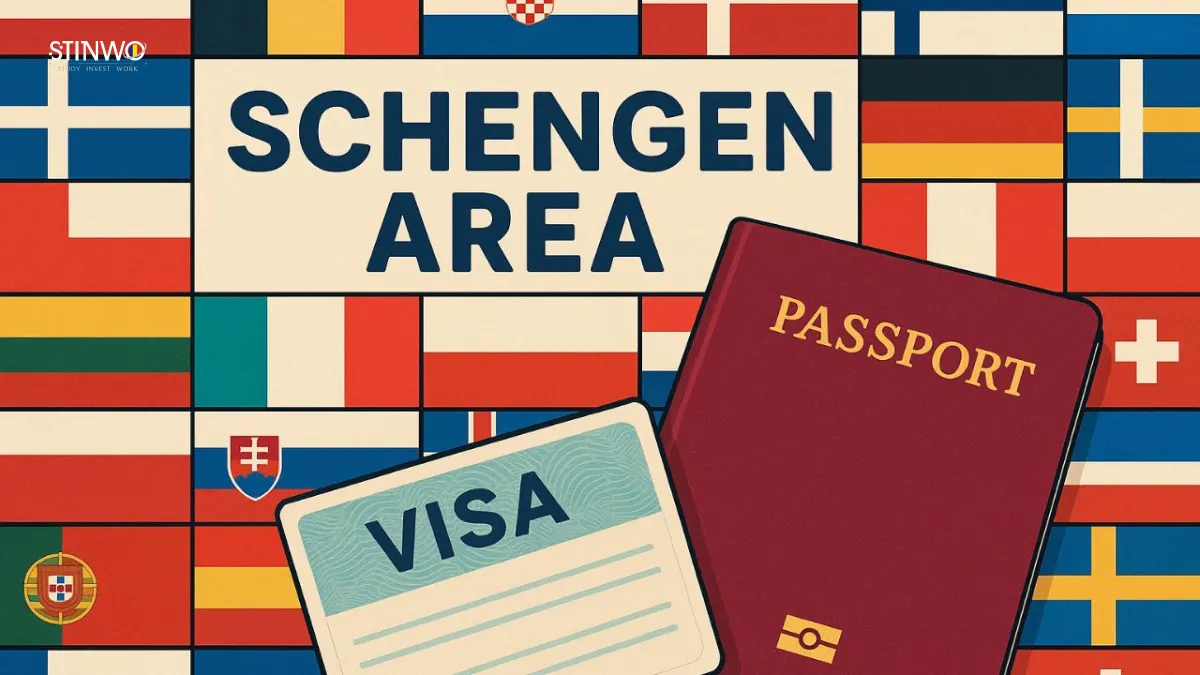
As of today, the number of Schengen countries is 29, meaning there are 29 Schengen visa countries you can visit without needing separate national visas (as long as your visa conditions allow it). The current Schengen countries in 2026 include:
- Austria
- Belgium
- Bulgaria
- Croatia
- Czech Republic
- Denmark
- Estonia
- Finland
- France
- Germany
- Greece
- Hungary
- Iceland
- Italy
- Latvia
- Liechtenstein
- Lithuania
- Luxembourg
- Malta
- Netherlands
- Norway
- Poland
- Portugal
- Romania
- Slovakia
- Slovenia
- Spain
- Sweden
- Switzerland
Many travelers assume all Schengen countries are part of the European Union, but that’s not true. While most Schengen visa countries are EU members, the following four Schengen countries are not part of the EU:
- Iceland
- Norway
- Switzerland
- Liechtenstein
These countries are members of the Schengen Area, meaning your visa generally allows entry into them—despite the fact that they are not EU countries.
Why the Schengen Visa Countries List Matters
Knowing the full list of Schengen visa countries is essential when you apply for a visa. The country you apply through usually depends on:
- your main destination
- where you will stay the longest
- or the first Schengen country you enter
Choosing the correct embassy or consulate is important because it directly affects your application process and approval chances.
Schengen visa requirements
Before you apply for a visa, the most important step is to clearly define and document your purpose of travel. During the Schengen visa application process, the consular officer must be able to understand—based on your documents—why you are entering the Schengen Area, how long you will stay, where you will travel, and where you will be accommodated.
Providing strong supporting evidence such as a valid invitation letter (if applicable), previous travel history, or a well-prepared itinerary helps create a structured and credible case. A detailed travel plan that includes exact travel dates, destination cities, hotel bookings, and transportation details can significantly strengthen your file and make it easier for the embassy to evaluate your request for entry into Schengen countries. After your travel purpose is clear, embassies typically focus on two major criteria:
Stability in Your Home Country
One of the main Schengen visa requirements is proving that you have strong reasons to return home after your trip. Employment documents, business licenses, and proof of ongoing responsibilities show that you have stable ties to your home country and are unlikely to overstay.
Financial Ability
Another crucial part of the Schengen visa application is showing you can financially support your trip. Applicants must usually provide proof of funds and bank statements from the last 3 to 6 months (depending on the destination country’s rules). These documents confirm that you can cover your travel and accommodation costs and are not relying entirely on others for financial support. The more accurate, consistent, and verifiable your documents are, the higher your chances of approval when you apply for a Visa.
Schengen Visa Requirements Checklist
Here is the standard list of documents required for a Schengen visa application:
- Completed Schengen visa application form
- Original current passport and previous passports (if available), with sufficient validity beyond your return from Schengen countries
- Two recent passport-size photos (3.5 × 4.5 cm) with a white background
- Employment or professional documents (employment letter, salary slips, business license, or company registration documents)
- Financial documents (proof of financial means, bank statements from the last 3–6 months—preferably in English—and property documents if applicable)
- Valid travel insurance covering the entire Schengen Area
- Round-trip flight reservation or confirmed ticket
- Hotel booking confirmation (if you do not have a host) or a valid invitation letter (if you are staying with a host)
One of the most overlooked Schengen visa requirements is consistency between your documents. Your travel purpose, employment status, financial ability, and itinerary must align logically and show no contradictions. A well-organized and professional application file increases transparency for the embassy and can play a key role in approval. When you apply for a Schengen visa, you must submit your Schengen visa application to the correct country—usually based on:
- the country where you plan to spend the most time
- your first entry point if the trip duration is similar across multiple Schengen countries
For example, if your Schengen journey begins in Germany, you should apply for a Germany visa, even if you plan to visit other Schengen countries afterward.
Schengen visa fee
The Schengen visa fee is generally determined by the applicant’s age, and in most cases, the fee is the same for both Type C (short-stay) visas and Type A (airport transit) visas. According to the latest official rates, the Schengen visa fee in 2026 is €90 for adults, €45 for children aged 6 to under 12, and free of charge for children under 6 years old.
It is important to note that the Schengen visa fee is non-refundable. This means that even if your application is refused, the amount you paid will not be returned. In addition, if you apply through a visa application center (such as VFS Global or other agencies), you may be required to pay an extra service charge on top of the official Schengen visa fee. This additional cost varies depending on the country and the service provider.
Applying for a Schengen visa step-by-step
To apply for a Schengen visa, you must follow a clear and structured process. From selecting your travel purpose and destination country to preparing your documents and attending your appointment, every step can directly affect the outcome of your Schengen visa application.

A well-prepared application increases credibility and improves your chances of approval. Below is a complete guide explaining how to apply for a Schengen visa in five practical steps.
Step 1: Define Your Travel Purpose and Choose the Right Visa Type
Before starting your Schengen visa application, you must clearly determine the purpose of your trip and select the correct visa type. Visas are issued based on different travel purposes such as:
- Tourism and sightseeing
- Business travel
- Visiting family or friends
- Attending cultural or sports events
- Short-term medical treatment
Each visa type comes with different requirements, so choosing the correct category is essential. The clearer and more well-documented your travel purpose is, the easier it becomes for consular officers to evaluate your file and approve your request to enter Schengen countries. At this stage, it’s recommended to outline your trip details, including:
- your departure and return dates
- the cities you plan to visit
- how many days you will stay in each city
- the reason for choosing those destinations
If your trip is tourism-related, a logical and well-structured itinerary makes your application appear more professional and can increase your approval chances when you apply for a Schengen visa.
Step 2: Choose the Correct Destination Country for Your Application
Once your travel purpose is clear, the next step is deciding which country you should apply through. This is one of the most important rules in the Schengen process because you must submit your Schengen visa application to:
- the country that is your main destination (where you stay the longest)
- the country of first entry, if you are staying in multiple Schengen countries for an equal number of days
Choosing the wrong embassy is a common mistake that can lead to delays, rejection, or cancellation of your appointment. Selecting the correct country ensures your application is reviewed through the proper channel from the start.
Step 3: Plan Your Timeline and Book Your Appointment Early
One major factor in successful visa approval is applying at the right time. If you want to apply for a Schengen visa with less stress and fewer risks, it’s best to begin early so you have enough time to:
- secure an embassy appointment
- prepare and translate documents if needed
- adjust your itinerary or bookings if required
After deciding your travel schedule, you must book an appointment at the embassy or an official visa center. Many embassies allow online appointment booking, but in some cases, appointments may be scheduled through email or specific embassy procedures. Starting the process early reduces pressure before travel and helps you avoid common problems like missing documents or unavailable appointment slots.
Step 4: Fill Out the Application Form and Prepare Your Documents Carefully
After booking your appointment, you must complete your form accurately. Any information you enter during your Schengen visa application must match your supporting documents. Even small inconsistencies between the form, itinerary, and documents may raise concerns and affect your results. The most important part of this stage is building a clear and consistent “story” through your documents—showing:
- why you are traveling
- where you will stay
- how you will fund your trip
- why you will return home
A typical document package includes: your passport, photos, employment documents, financial proof, travel insurance, flight reservations, hotel bookings or invitation letter, and a travel itinerary. To strengthen your file, make sure your documents are organized, complete, and presented professionally. This improves clarity for the consular officer and reduces the chance of unnecessary questions or document issues.
Step 5: Attend Your Appointment, Submit Biometrics, and Pay the Fee
On the day of your appointment, arrive on time and submit all documents in full. Some applicants may be asked short questions about their trip, accommodation, financial situation, and return plans. Your answers must match your application form and documents to build trust during the evaluation process.
After submission, you will pay the visa fee and complete biometric registration (fingerprints and photo), if required. Then your application enters the evaluation stage and you must wait for the decision.
Schengen Visa Processing Time: What to Expect
The Schengen visa processing time depends on the destination country, season, and embassy workload. During peak travel periods, processing can take longer due to higher application volume. In most cases, applicants receive results within a few weeks, but the processing time may vary depending on:
- destination country policies
- high-demand seasons
- additional document requests
- verification procedures
If you follow the correct steps and submit a well-organized file, your chances of getting approved are significantly higher—and delays are less likely.
Schengen visa rejection reasons
Getting refused for a visa is more common than many applicants expect. Even if you submit documents, a consular officer may still decide that your file does not meet the required conditions. If your visa is denied, you usually receive your passport along with an official refusal letter that mentions the reason for rejection. However, these letters are often written in a general way and may not clearly explain every detail or weakness in your application.
In most cases, Schengen visa rejection reasons fall into a few major categories. Understanding them helps you strengthen your application and avoid repeated refusals. Here are the most frequent Schengen visa rejection reasons:
- The embassy is not convinced you will return to your home country: This is one of the most common reasons. If your job, financial situation, or family ties are not strong enough, the officer may doubt your intention to leave the Schengen Area after your trip.
- Criminal history or security-related concerns: Any record related to sensitive issues such as drug offenses, terrorism, or serious legal matters can result in rejection.
- Submitting false documents or incorrect information: Providing fake documents, misleading data, or inconsistent information is a serious issue and often leads to refusal—sometimes with long-term consequences for future applications.
- Invalid or damaged passport:A passport that is expired, heavily damaged, or unclear (for example, torn pages or unreadable details) can lead to rejection.
- Inability to prove financial capability: If you cannot clearly prove you have enough funds to pay for travel, accommodation, and living expenses, your application may be rejected.
- Unacceptable or unverifiable travel insurance:Travel insurance must meet specific embassy standards. If your insurance is not valid, cannot be verified, or does not meet requirements, it can be a direct reason for refusal.
How to Reduce the Risk of Schengen Visa Rejection
To reduce rejection risk, your file must be consistent and convincing. Your purpose of travel, itinerary, accommodation details, and financial documents should all support one clear story. At the same time, your employment proof and home-country ties must be strong enough to remove any doubt about your return. A well-structured and organized application makes it easier for the officer to trust your case—and significantly lowers the chance of rejection.
Fixing a Visa Rejection (What to Do Next)
After receiving a refusal, applicants typically choose one of two approaches:
Appeal the Decision
In some cases, an appeal can be successful—but only when you clearly understand:
- the exact reason for rejection
- how to fix the weak points
- what additional documents are needed to strengthen your case
If you appeal without correcting the main issue, it usually results in wasted time and extra cost, and you may receive the same outcome again.
Improve Your File and Reapply
For many applicants, the better option is to correct the weaknesses and submit a new application. This strategy works especially well when the refusal was based on unclear travel purpose, weak financial proof, or insufficient home-country ties. A strong reapplication usually includes:
- a more detailed and logical itinerary
- clearer accommodation and booking documents
- stronger employment and financial evidence
- improved travel history
Some applicants also choose structured travel options (such as organized European group tours) because they provide more consistent travel plans, confirmed reservations, and clearer trip structure—making the application more credible. Improving your travel history and submitting a stronger second file not only increases approval chances, but can also help you qualify for future benefits such as a multiple-entry Visa.
Schengen Visa Rejection Rate: Why It Matters
The schengen visa rejection rate varies by country, season, and applicant profile. However, rejections most often happen due to weak documentation or lack of convincing evidence—rather than random decisions. Knowing the most common Schengen visa rejection reasons helps you avoid the typical mistakes and improve your approval odds.
Easiest country to get Schengen visa
When people look for the easiest country to get a Schengen visa, Romania has recently gained more attention because it is now a full member of the Schengen Area. This change has made its visa process more aligned with standard Schengen rules, which can feel simpler and more predictable for applicants with clear travel plans and complete documents.
A Romania Visa has the same validity as other Schengen visas and allows short-term travel across the entire Schengen Area (up to 90 days within 180 days). However, you must still apply through the country that is your main destination (where you stay the longest). So, if your trip starts in Romania and it is your primary destination, applying through the Romania embassy is the correct option.
This visa is only for short stays and is not suitable for immigration. For long-term relocation, you need a separate Romanian study or work visa.
Apply for Schengen visa online
When you apply for a Schengen visa online for Romania country, working with a specialized team can significantly improve your chances of success. A professional visa service can guide you step-by-step—from understanding what a Schengen visa is, to choosing the correct application route and preparing your file according to consular standards. By reviewing your personal circumstances, travel purpose, and selecting the right visa type, your application becomes more consistent, realistic, and easier for the embassy to evaluate.
In addition to visa support, Stinwo also provides broader guidance for long-term pathways such as study migration, work migration, and other residence options in Romania. These services typically include initial eligibility assessment, choosing the right route, document preparation, and ongoing support throughout the process—helping applicants make informed decisions based on current rules and available opportunities.
Resource: Official website of EU