




Studying dentistry abroad has become an increasingly popular choice for international students, and Romania stands out as one of the most accessible and high-quality destinations in Europe. If you are planning to Study Dental Medicine in Romania, this guide provides everything you need to know — from universities and tuition fees to admission requirements and application timelines. With globally recognized degrees, affordable tuition fees, and English-taught programs, Romania offers an ideal pathway for students looking to build a career in dental medicine.
Benefits of Studying Dental Medicine in Romania
Romania has become a preferred destination for international students seeking high-quality dental education at an affordable cost. The country offers a balanced combination of academic excellence, modern infrastructure, and global recognition, making it an excellent choice for aspiring dentists. Below are some of the main advantages of choosing Romania for dental studies:
- Degrees recognized across the European Union and internationally
- Lower tuition fees compared to many Western European countries
- Availability of programs in English, French, and Romanian
- Access to advanced laboratories and clinical training environments
- Simplified admission process with no entrance exams in most cases
- Diverse and welcoming international student community
Furthermore, Romanian universities place strong emphasis on clinical exposure, allowing students to develop practical skills and confidence throughout their academic journey.
Study Dentistry in Romania in English
One of the biggest advantages for international students is the availability of English-taught programs. Many top universities offer full dental medicine degrees in English, eliminating the need to learn Romanian before starting the program. English programs follow the same curriculum as Romanian-language programs and are designed to meet international standards.
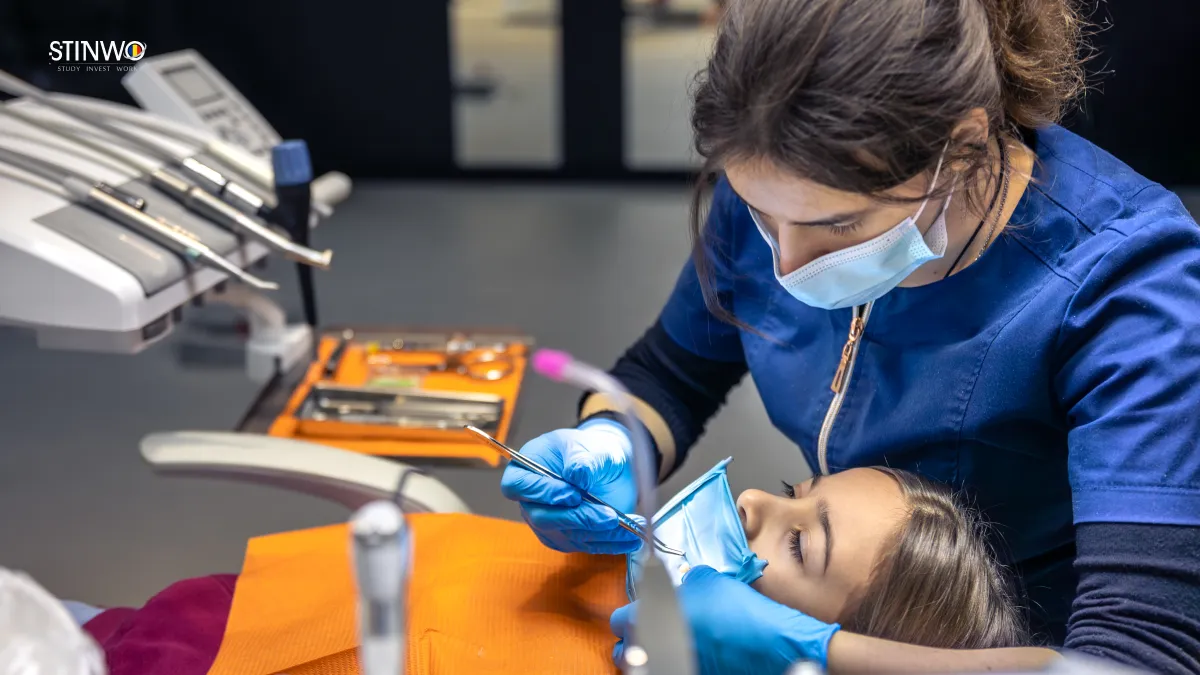
Students study subjects such as:
- Oral pathology
- Prosthodontics
- Orthodontics
- Dental surgery
- Preventive dentistry
Clinical practice is integrated into the program from early years, allowing students to develop real-world skills before graduation.
Best Dental University in Romania
Romania is home to several prestigious universities offering dental medicine programs. Each institution has its own strengths in terms of facilities, tuition fees, and international exposure. Some of the best Dental universities in Romania include:
- Iuliu Hațieganu University of Medicine and Pharmacy
- Grigore T. Popa University of Medicine and Pharmacy
- Victor Babeș University of Medicine and Pharmacy
- Carol Davila University of Medicine and Pharmacy
- Ovidius University of Constanța
- Titu Maiorescu University
- University of Oradea
- Dunărea de Jos University
- George Emil Palade University
- University of Medicine and Pharmacy of Craiova
- Apollonia University of Iași
- Vasile Goldiș Western University
These universities offer modern infrastructure, experienced faculty members, and internationally aligned curricula.
Iuliu Hațieganu University of Medicine and Pharmacy
UMF Cluj-Napoca offers a 6-year Dental Medicine program (360 ECTS) with English, French, and Romanian study lines. Admission is file-based, evaluating academic records and eligibility documents, and the tuition fee is around €10,000 per year for 2026–2027.
Grigore T. Popa University of Medicine and Pharmacy
UMF Iași provides a 6-year Dental Medicine program (360 ECTS) with admission based on a file evaluation and an admission interview. Applicants are assessed on their academic background, especially Biology and Chemistry-related subjects, along with the quality of their submitted documents and overall profile. The program is internationally recognized and offers modern clinical training, with tuition fees around €9,000 per year for 2026.
Victor Babeș University of Medicine and Pharmacy
UMFT offers a 6-year Dental Medicine program (360 ECTS), with admission based on application documents and academic evaluation. Tuition for 2026 is approximately €9,000 per year, with both Romanian and English study options available.
Carol Davila University of Medicine and Pharmacy
This University provides a Dental Medicine program in English (6 years, 360 ECTS) with admission based on an online application and interview. Tuition for 2026 is around €10,000 per year, and it is one of the most competitive dental faculties in Romania.
Ovidius University of Constanța
UOC offers a 6-year Dental Medicine program with modern clinical training and a strong practical focus. Admission is generally file-based or exam-based depending on the intake year, and tuition is typically around €8,000–€9,000 per year for international students in 2026.
Titu Maiorescu University
TMU provides a 6-year Dental Medicine program in English, with admission based on an entrance exam in Biology and Chemistry or Physics. For 2026, tuition ranges between €13,500–€16,500 per year, making it one of the higher-cost private options in Romania.
Study Dental Medicine in Romania Fees (2026)
Understanding the cost is a crucial step when planning to study abroad, especially for Dental Medicine, where tuition and living expenses can significantly impact your overall budget. Romania offers relatively affordable tuition fees compared to many other European countries, while still maintaining high academic standards and EU-recognized degrees. The exact cost depends on the university, type of institution (public or private), and language of study, but most programs remain within a competitive range for international students.

If you are planning your academic journey, it is important to carefully review Study Dentistry in Romania fees to choose the university that best fits your budget and long-term goals. Below is a comparison of Study Dental Medicine in Romania fees for 2026, helping you better understand the financial requirements and choose the option that best fits your goals and budget:
| University | Tuition Fees (Per Year) | Application Fee |
| Iuliu Hațieganu | €10,000 | €300 |
| Grigore T. Popa | €9,000 | €200 |
| Victor Babeș | €9,000 | €200 |
| Carol Davila | €10,000 | 2500 LEI |
| Ovidius Constanța | €8,000 | €200 |
| Titu Maiorescu | €16,500 | 750 LEI |
| University of Oradea | €8,100 | €250 |
| Dunărea de Jos | €7,000 | €250 |
| George Emil Palade | €10,000 | €500 |
| UMF Craiova | €6,500 | – |
| Apollonia University | €8,000 | €120 |
| Vasile Goldiș University | €7,000 | 3500 LEI |
These fees demonstrate that Romania provides a wide range of options for different budgets, from more affordable public universities to higher-cost private institutions.
Study Dental Medicine in Romania Cost
In addition to tuition fees, students should consider living expenses. Romania is known for its low cost of living compared to other EU countries. Average monthly expenses include:
- Accommodation: €200 – €500
- Food: €150 – €300
- Transportation: €20 – €50
- Miscellaneous: €100 – €200
Overall, the total monthly cost ranges between €400 and €900, depending on the city and lifestyle.
Study Dental Medicine in Romania Requirements
To apply for a Dental Medicine program, international students must meet a set of academic and administrative requirements designed to ensure they are prepared for the intensity of medical studies. These generally include a recognized high school diploma with strong grades in science subjects such as Biology and Chemistry, along with complete academic transcripts. Applicants are also required to submit identification documents, a valid passport, and any language proficiency certificates if the program is taught in English, French, or Romanian.
In addition, some universities may request a motivation letter or CV as part of the evaluation process. General admission requirements may vary slightly depending on the university, but all institutions focus on selecting candidates with a solid academic background and genuine motivation for studying Dental Medicine. Below we have mentioned the requirements for 2026 in order to study Dental Medicine in Romania:
- High school diploma (preferably with Biology and Chemistry)
- Academic transcripts
- Valid passport
- Proof of English language proficiency (if required)
- CV (in some universities)
- Motivation letter
- Application form
- Passport-sized photos
Unlike many Western countries, most Romanian universities do not require entrance exams. Admission is typically based on academic performance and document evaluation.
Admission Periods and Deadlines
The admission process for dental medicine in Romania usually takes place in multiple rounds throughout the year. In general, application periods fall between:
- March to May (early intake)
- June to July (main intake)
- August to September (final intake, depending on availability)
Since deadlines vary by university, it is important to prepare documents early and apply as soon as possible to secure a place.
Duration and Structure of the Program
The dental medicine program in Romania typically lasts 6 years, divided into:
- Pre-clinical years (basic sciences and theoretical courses)
- Clinical years (practical training and patient interaction)
The curriculum is designed to gradually transition students from theoretical knowledge to hands-on clinical experience. Graduates receive a Doctor of Dental Medicine (DMD) degree, which is recognized across the European Union and many other countries worldwide.
Advantages of Studying Dentistry in Romania
Choosing to Study Dentistry in Romania comes with several long-term benefits:
- EU-recognized qualification
- Opportunity to work or specialize in Europe
- High-quality education at a lower cost
- Exposure to international healthcare systems
- Strong clinical training
Romania also serves as a gateway for students who wish to continue their careers or specialization in other European countries.
Career Opportunities After Graduation
Graduates of dental medicine programs in Romania have various career paths available to them. Some options include:
- Opening a private dental clinic
- Working in hospitals or dental centers
- Pursuing specialization (orthodontics, surgery, etc.)
- Working internationally within the EU
- Continuing with postgraduate studies
Since the degree is recognized in many countries, graduates have the flexibility to build their careers globally.
How to Apply for Dental Medicine in Romania
The application process for Dental Medicine in Romania is relatively straightforward, but it requires careful preparation and attention to detail. First, applicants need to select their preferred university and check the specific entry requirements, as these may vary slightly between institutions. Next, they must prepare and translate the required documents, which usually include a high school diploma, academic transcripts, a valid passport, and proof of language proficiency if needed. After that, the complete application file is submitted to the university within the official admission period. Here you can find info about admission step by step:
- Choose your preferred university
- Prepare required documents
- Submit your application
- Receive acceptance letter
- Pay tuition or reservation fee
- Apply for a student visa (for non-EU students)
- Travel to Romania and enroll
Timely submission and accurate documentation are key to avoiding delays or rejections.
Need help with admission? If you are planning to study dentistry abroad and want expert guidance, professional consultation from Stinwo can make the whole process much easier by supporting you in choosing the right university, preparing and submitting your application, securing admission, handling the student visa process, and providing ongoing guidance throughout your journey. Starting your dental career abroad is a big step, and having the right support from Stinwo can truly make all the difference.
Conclusion: Study Dental Medicine in Romania 2026
Choosing to Study Dental Medicine in Romania is a strategic decision for students seeking quality education, affordability, and international recognition. With a wide selection of universities, English-taught programs, and reasonable living costs, Romania continues to attract thousands of international students each year. Whether your goal is to become a practicing dentist, specialize in a specific field, or build a global career, Romania offers a solid foundation for success.