9000 Euro
6_years
residency, undergraduate, master, phd
english, romanian, french
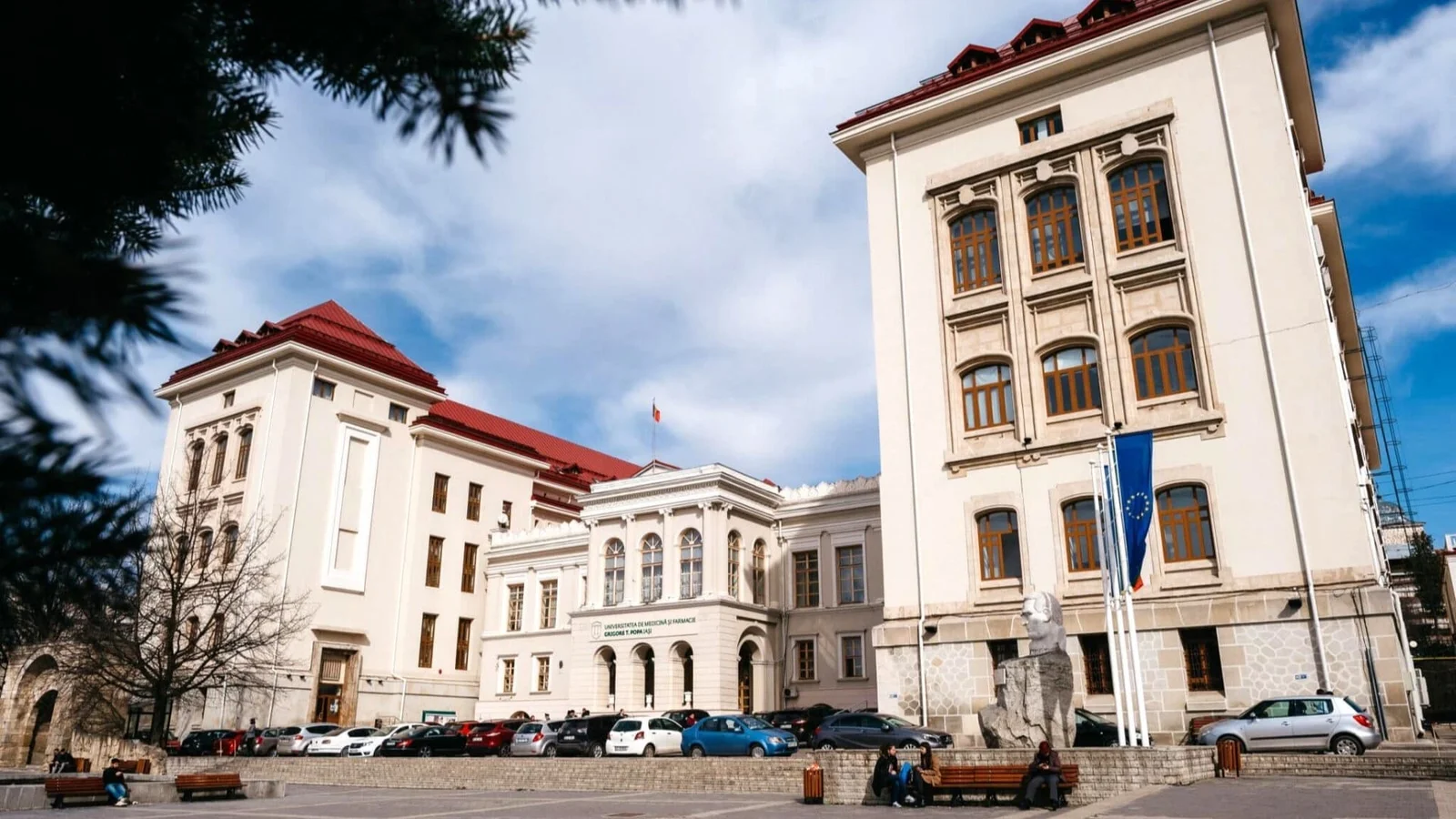
Medicine at Grigore T. Popa University of Medicine and Pharmacy, spans 6 years and provides 360 credits. With over 140 years of experience in higher medical education, the university has established a strong reputation both nationally and internationally. Graduates receive a diploma recognized in the EU, ensuring that they are well-equipped for medical practice across European countries.
The program includes study in modern laboratories and research centers, where students gain hands-on experience in university hospitals, interacting with patients directly. This practical training is complemented by access to international mobility programs, which offer students the opportunity to broaden their academic and clinical experience abroad. Additionally, the curriculum is delivered entirely in English, and students have the opportunity to specialize in a wide range of medical specialties.
The Faculty of Medicine at Grigore T. Popa University of Medicine and Pharmacy in Iași has a rich history, have been established on September 30, 1879, following the approval of its budget and didactic program by the Parliament of the Kingdom of Romania. The inaugural anatomy course was delivered by Dr. Leon Scully on December 1 of the same year, marking the start of medical education in the institution. Initially, the medical courses were integrated with the Faculty of Science at the University.
Today, the faculty enrolls over 800 students annually, offering rigorous training in both fundamental and clinical disciplines. This education continues post-graduation through various continuous medical education programs. The Faculty of Medicine also trains residents in all medical specialties, doctoral students in 36 specialties, and provides ongoing professional development for specialist doctors throughout Moldova.
Alongside academic and medical training, the faculty is deeply involved in research and plays a key role in enhancing healthcare through its partnerships with university hospitals. This legacy of excellence in medical education and research has contributed significantly to the development of medical sciences in Romania.
The Medicine faculty at UMF Iași encompasses various departments that collectively provide a comprehensive medical education. These departments include Morpho-Functional Sciences I & II, which focus on anatomy and histology, Medical I, II, and III for clinical knowledge, and Surgery I & II, which teach surgical techniques.
Additionally, Mother and Child Medicine covers obstetrics, gynecology, and pediatrics, while Preventive Medicine and Interdisciplinarity emphasizes public health and the integration of multiple medical fields for effective patient care.
The Faculty of Medicine at Grigore T. Popa University of Medicine and Pharmacy offers a 6-year Bachelor’s degree program in Medicine across three languages: Romanian, English, and French. This program is designed to provide comprehensive medical education, preparing students for careers in healthcare.
The curriculum is structured to ensure that graduates are well-equipped for both national and international medical practice, with the option to study in the language that best suits their needs.
The Faculty of Medicine at Grigore T. Popa University of Medicine and Pharmacy offers two Master’s programs within the medical field. The first program, Management of Health Services in the Medical-Pharmaceutical Field, is taught in Romanian and is structured as a full-time program offering 120 credits.
It is coordinated by Associate Professor Georgeta Zanoschi. This program is designed to equip students with the skills necessary for managing healthcare services, particularly within the medical and pharmaceutical industries.
The second program, Nutrition and Prophylactic and Curative Diet, also taught in Romanian, provides 120 credits and is delivered in a full-time format. Professor Mariana Graur coordinates the program, which focuses on the nutritional aspects of health, covering both preventive and therapeutic dietary practices essential for the medical field.
Both programs are aimed at individuals looking to advance their expertise in health management and nutrition, providing them with the knowledge to pursue specialized careers in the healthcare and pharmaceutical sectors.
Specification | Details |
|---|---|
Available Degrees | Integrated long-cycle Medical Doctor (MD); postgraduate routes include residency and PhD pathways at the university level. |
Teaching Languages | International tracks operate with interviews in English/French/Romanian depending on chosen language. |
Standard Program Duration | 6 years |
Total Semesters | 12 semesters (6 academic years) |
Total Credits | 360 credits |
Entrance Examination | File Based |
Admission Registration Period –
Deadline | March 1 – May 1, 2026 – registration |
The 2024-2025 Medicine program at “Grigore T. Popa” University covers a six-year curriculum. It starts with foundational courses in Anatomy, Biochemistry, and Medical Informatics, progressing to specialized areas like Surgery, Pediatrics, and Obstetrics-Gynecology. Students gain practical experience through medical practicum, on-call training, and complete a graduation thesis in the final year. The program offers a comprehensive preparation for a career in medicine.
In the 2025-2026 academic year, the first-year Medicine program at “Grigore T. Popa” University of Medicine and Pharmacy in Iași includes courses such as Anatomy and Embryology, Biochemistry, Cellular and Molecular Biology, Biophysics, Physiology, and Behavioural Sciences (Medical Sociology and Psychology).
Students also study Medical Informatics, Bioethics, and History of Medicine, alongside practical courses in First Aid and Medical Maneuvers. Language courses (Romanian, French, English, or German) and Physical Education are mandatory, with optional disciplines and a specialized medical practicum offered to enhance the learning experience.
In the second year of the “Medicine at Grigore T. Popa University” program, students deepen their medical knowledge with courses such as Anatomy and Embryology, Physiology, Histology, Genetics, and Immunology. They also study Microbiology, Clinical Biochemistry, and Medical Communication.
Practical skills are developed through modules in surgical maneuvers, medical research methodology, and hygiene, complemented by specialized medical practicum and on-call training. Physical education and optional disciplines round out the curriculum, providing students with a well-rounded foundation for their medical careers.
In the third year of the “Medicine at Grigore T. Popa University” program, students explore General and Clinical Pharmacology, Primary Health Care, Pathological Anatomy, and Physiopathology. Medical Semiology courses cover various systems, including Cardio-Vascular, Respiratory, Digestive, Renal, and Hematopoietic.
Students also learn Surgical Semiology, focusing on Vascular Surgery, Heart Surgery, and Palliative Care. The curriculum includes optional disciplines, specialized medical practicum, and on-call training, enhancing both theoretical and practical medical expertise.
During the 4th year of the “Medicine at Grigore T. Popa University” study program, students will be studying these disciplines:
They also study Hygiene, Clinical Biochemistry, and Medical Communication. The curriculum includes optional disciplines, specialized medical practicum, and on-call training to deepen both practical and theoretical medical knowledge.
In the fifth year of the “Medicine at Grigore T. Popa University” program, students will be focused on areas such as disciplines mentioned below:
The curriculum also includes optional disciplines, specialized medical practicum, and on-call training for in-depth learning and practice.
In the sixth year of the “Medicine at Grigore T. Popa University” program, students study advanced fields such as Obstetrics-Gynecology, Neonatology, Infectious Diseases, Dermatovenereology, Psychiatry, Family Medicine, Geriatrics, Forensic Medicine, Rheumatology, and Public Health. They also focus on completing their graduation thesis while learning about Ethics, Economy in Health, and Sanitary Management. Specialized medical practicum and on-call training continue to enhance practical skills.
International admission focuses on document verification, academic evaluation, and an interview step. Required documents typically include:
International admission generally involves verifying your documents, reviewing your academic records, and completing an interview. You’ll submit core identification, education, medical, and language documents (plus required declarations), and you can optionally add extra materials like volunteering or recommendations to boost your score.
9000 Euro
For international candidates (academic year 2026–2027), UMF Iași lists:
Other administrative and living costs—insurance, visa/residence formalities, materials—depend on personal circumstances and are not uniformly listed in the admission summary documents.
A Medicine degree at Grigore T. Popa University opens doors to a wide range of career paths in healthcare and beyond. After completing your studies (and any required residency or specialization), graduates typically pursue roles such as:
Whether you see yourself in patient care, research, public health, or health innovation, this program provides a strong foundation for building a medical career in Romania or internationally—keeping in mind that working abroad may require meeting local licensing requirements.
Indicator | Number |
|---|---|
Faculty of Medicine Students | 9,908 students (university-wide, all faculties) |
Available Places Medicine (English) | 200 places (Medical Doctor – listed on the program page) |
University Founded | 1879 |
University Status | Public university operating within Romania’s national higher-education framework (admission calendar is issued under the Ministry of Education and Research header) |
Studying Medicine at Grigore T. Popa University of Medicine and Pharmacy (UMF Iași) offers a mix of academic strength, international accessibility, and strong career outcomes. Key advantages include:
Together, these benefits make UMF Iași an attractive option for students looking for a well-recognized, internationally oriented medical program with a clear path into a high-demand profession.
This section highlights how Medicine at UMF Iași is positioned in terms of institutional credibility and international recognition. It summarizes the university’s quality assurance and accreditation framework, along with its visibility in major ranking and benchmarking systems—helping applicants understand how the program is externally validated and how it may support graduate mobility across countries.
Quality assurance and accreditation for UMF Iași are supported through Romania’s national frameworks and internationally recognized QA listings. Key points include:
Overall, these elements show that UMF Iași operates within a formal, externally validated quality assurance system that is aligned with widely recognized European QA structures.
UMF Iași is also referenced across several international ranking and benchmarking platforms. The following figures are useful as a quick snapshot of its visibility in different systems and editions:
Together, Bologna-style credit structure, nationally regulated external QA (via ARACIS/EQAR/ENQA), and visibility in major ranking systems support international recognition and graduate mobility—while graduates should still confirm destination-country licensing requirements for medical practice.